Writing
← Writing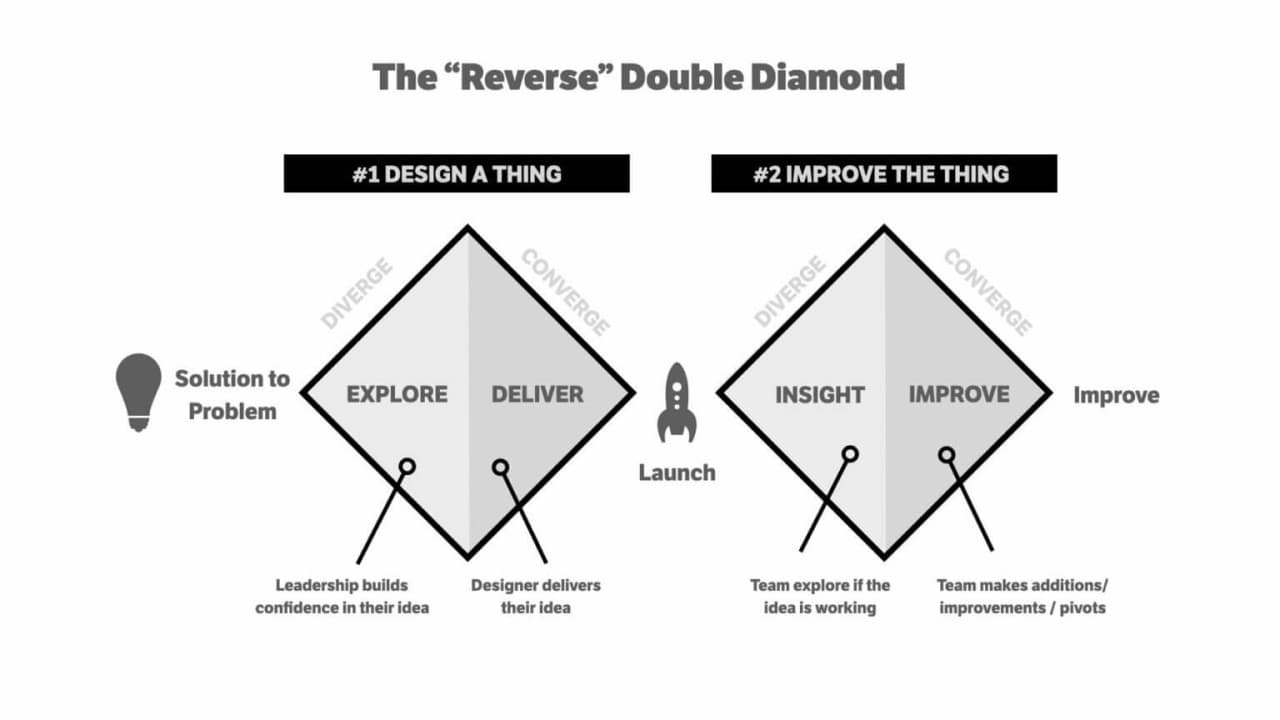
Reverse Double Diamond Approach: Prototyping in the Age of AI
The traditional Double Diamond can feel slow in a world where AI lets you prototype in hours. The reversed model flips the sequence (prototype first, refine later) and it's changing how product teams learn and design.
The Double Diamond has shaped how product teams think about design for decades. Discover, define, develop, deliver. It built rigor into a process that previously had none, and that was valuable.
The problem is pace. The model was designed for a world where prototyping was expensive and slow. Building something to test took weeks. Getting it in front of users took more weeks. Iterating meant starting a new cycle.
AI changes the cost structure. You can prototype in hours now. That changes what the right sequence actually is.
The Traditional Double Diamond
The classic model:
- Discover: Research user needs and explore the problem space
- Define: Synthesize insights to narrow down the challenge
- Develop: Ideate and create solutions
- Deliver: Build and ship the best solution
Teams align with users, validate assumptions, and build solutions with care. The tradeoff is that hands-on feedback arrives late, after significant investment in defining and refining.
The Reversed Model
The reversed approach starts with a prototype, not a problem definition. AI tools generate layouts, flows, and working code from text prompts or sketches fast enough that rough versions exist before the research phase ends.
The sequence:
- AI-assisted ideation and rapid prototyping
- Early testing with real feedback
- Refinement and iteration based on insights
- Final delivery with confidence
You validate direction before committing to it. You learn from actual user behavior instead of from assumptions about it. Expensive pivots happen earlier, when they are cheap.
Why This Works Now
AI removes the skill barrier that made early prototyping impractical. A new designer can produce a functional mockup without advanced skills. An experienced designer can test five directions in the time it previously took to test one.
This is not just a speed gain. It changes the quality of decisions. Teams stop debating what users might prefer and start observing what they actually do.
When It Fits
The reversed model works best when you are exploring genuinely new territory with many unknowns. It is less appropriate for mature products with established patterns where the discovery phase should carry more weight.
Conditions where it makes sense:
- Validating a new product direction before full investment
- Working in environments where speed is a real constraint, not just a preference
- Leveraging AI tools for concept generation and quick iteration
The Fundamental Shift
The reversed model is not an argument that research does not matter. It is an argument that the relationship between research and prototyping is different now that the cost of building something to test has dropped by an order of magnitude.
Design fundamentals are unchanged. What changes is the point in the process where you get the information that actually shapes the design.