Writing
← Writing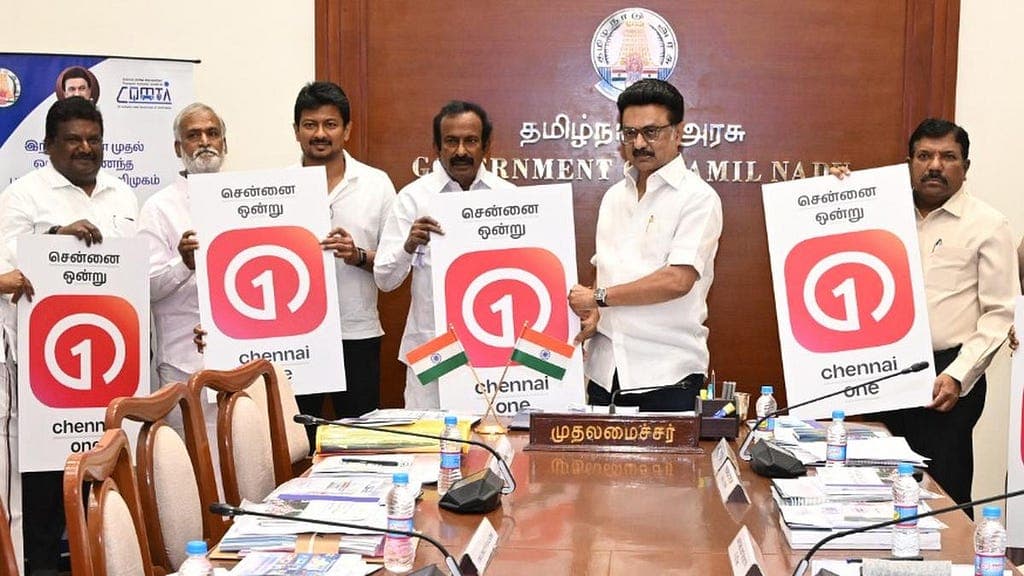
Chennai One: How Tamil Nadu's Vision and Design Leadership Set the Standard for Public Transport in India
India's first fully integrated transit app, Chennai One, lets commuters plan, book, and pay across metro, buses, trains, and autorickshaws in a single interface. Here's what makes it a design-led governance milestone.
Public transport in India has always been a paradox. Millions depend on it daily, yet the experience has often been marked by inefficiency, long queues, cash-only systems, and a lack of coordination across modes. While private players like Uber and Ola redefined mobility with seamless digital experiences, government-run services lagged behind, weighed down by legacy infrastructure and fragmented operations.
In September 2025, Tamil Nadu Chief Minister M.K. Stalin unveiled Chennai One, India's first fully integrated transit app. Backed by the Chennai Unified Metropolitan Transport Authority (CUMTA), the app allows commuters to plan, book, and pay for journeys across metro, buses, suburban trains, and autorickshaws, all within a single, clean, user-friendly interface.
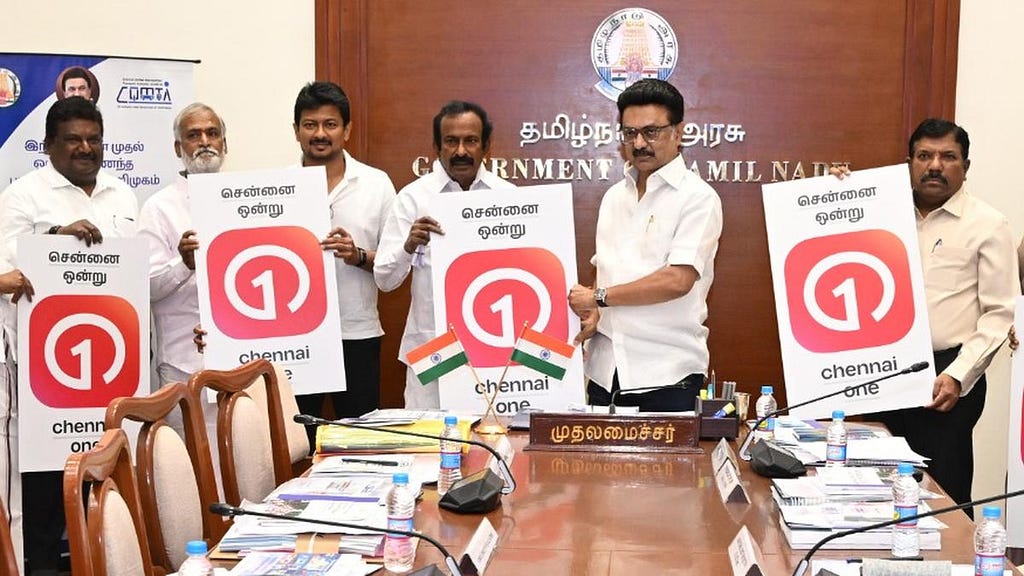
It is the first time an Indian government app has placed commuter experience at the center of public transport governance.
The Problem: Why Indian Commuters Needed This
Before Chennai One, the public transport experience in Chennai mirrored that of most Indian cities:
- Commuters queued at metro stations for tokens or monthly passes.
- Bus passengers fumbled with cash, waiting for conductors to issue paper tickets.
- Suburban train riders bought physical passes from crowded counters.
- Autorickshaw hailing required negotiation, often without fare transparency.
- Each system operated in silos with no unified planning or payment method.
For a commuter traveling from Tambaram to T. Nagar, for example, the journey might involve a suburban train, a bus, and an autorickshaw, each requiring separate payments and coordination. The cognitive load and time wasted discouraged many from choosing public transport, pushing them toward private vehicles.
Chennai One sought to solve these systemic problems with design and integration, not just technology.
The Vision: Tamil Nadu's Leadership in Mobility
The Chennai One app is part of a larger, 25-year Comprehensive Mobility Plan (CMP) spearheaded by the Tamil Nadu government. Worth ₹2.5 lakh crore, the plan envisions a seamless, inclusive, and sustainable transport ecosystem for Chennai.
At the launch, Chief Minister M.K. Stalin declared:
"With Chennai One, we are pioneering a model of urban mobility that reflects inclusivity, efficiency, and sustainability. Our goal is to make public transport the preferred choice of every citizen."
This statement captures the philosophy behind Chennai One: it is not about technology for technology's sake, but about governance with design thinking.
CUMTA, the nodal agency for urban mobility, led the initiative with support from state funding. Importantly, the government partnered with modern tech firms, leveraging the open-source Namma Yatri platform to ensure agility while maintaining oversight. This balance of state vision + private expertise is rare in Indian governance, and it shows in the product outcome.
The Product Design Philosophy
What makes Chennai One exceptional is its commuter-first product design. Every choice reflects attention to usability, inclusivity, and simplicity.
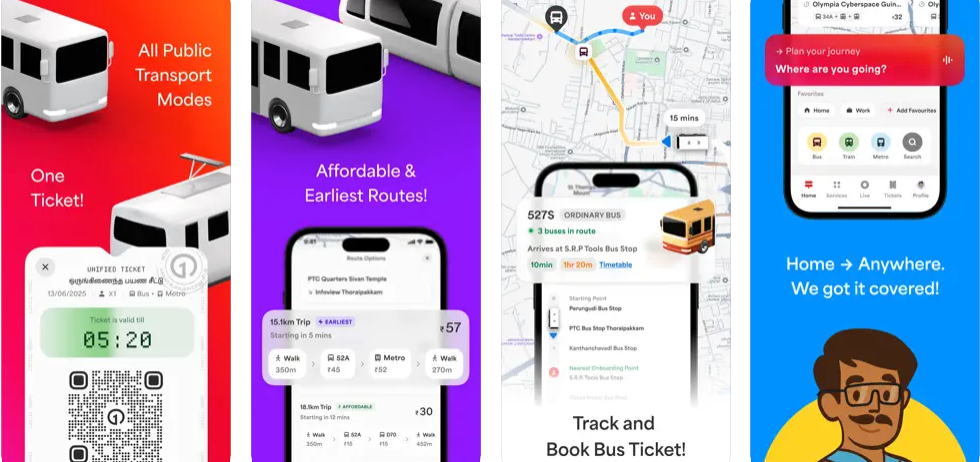
Clean and Modern UI. The app avoids clutter, focusing on three core actions: plan a route, buy a ticket, and track a journey. Icons are intuitive, fonts are readable, and the interface feels modern, qualities not often associated with government apps.
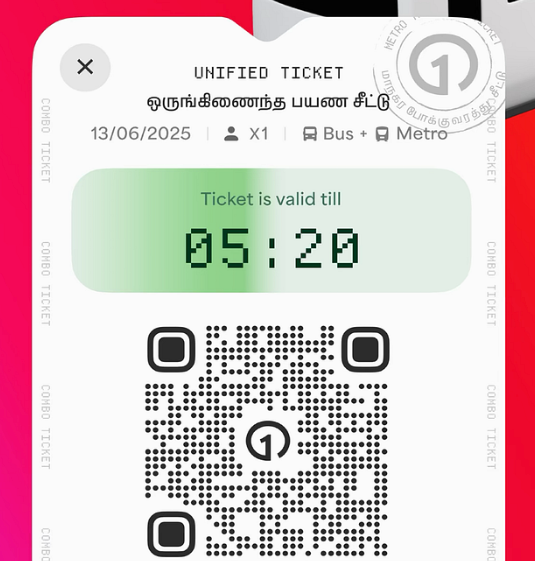
Unified QR Ticketing. Perhaps the biggest innovation: a single QR code can be used across metro, bus, and train legs of a journey. This eliminates queues, paper tickets, and redundant payments. It is India's first true multimodal digital ticketing system.
Real-Time Tracking. GPS integration shows live bus and train locations, akin to Uber's map. This reduces uncertainty, one of the biggest barriers to public transport adoption.
Digital Payments. With UPI and card support, transactions are instantaneous. No more fumbling with change or waiting for conductors.
Multilingual Inclusivity. The app supports Tamil, English, Hindi, Telugu, and Kannada. In a linguistically diverse state, this is critical for adoption across demographics.
Iterative Updates. CUMTA established a quality control team to gather feedback and roll out updates quickly. Early glitches were resolved within days, signaling an agile, user-centered approach.
Comparisons: Why Chennai One Stands Apart
Other cities have attempted digital transport apps:
- Delhi's One Delhi allows route planning but not unified ticketing.
- Bengaluru's Tummoc offers multimodal planning but limited payments.
- Private apps like Chalo focus on bus passes, not citywide integration.
Globally, London's Oyster and Singapore's EZ-Link are successful unified payment systems, but even they started with physical cards. Chennai One leapfrogs straight into a smartphone-first, QR-based digital ecosystem.
No Indian city has combined all modes with unified ticketing and real-time tracking in one app. Chennai is the first.
Adoption and Public Reception
The response has been overwhelming:
- 1.3 lakh downloads within 24 hours.
- 4,400 tickets booked on day one across buses, metro, and suburban rail.
- 1 lakh auto drivers registered via Namma Yatri integration.
The Times of India called it a "game-changer replicating the cashless ease of Ola and Uber". While minor glitches were reported, CUMTA's agile updates reassured users. Instead of frustration, the narrative remained overwhelmingly positive, a rarity for government technology rollouts.
Conclusion: A Benchmark for India
When governance, technology, and design align, public services can match private experiences. Chennai One is the clearest Indian example of that so far.
For commuters, it means less stress, less waiting, and more confidence in public transport. For Tamil Nadu, it signals what digital governance can look like when a government treats user experience as a delivery requirement, not an afterthought. For other Indian cities, it sets a specific, replicable benchmark.
As one commuter posted on launch day: "No queues. No confusion. No crumpled cash. Just one app."